“Boom & Bloom” Activity Day 2026: A Day of Discovery in Eldena
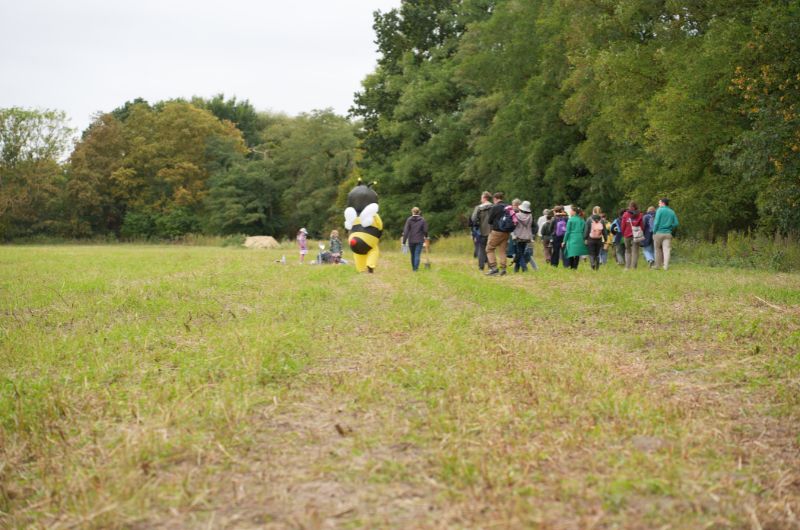
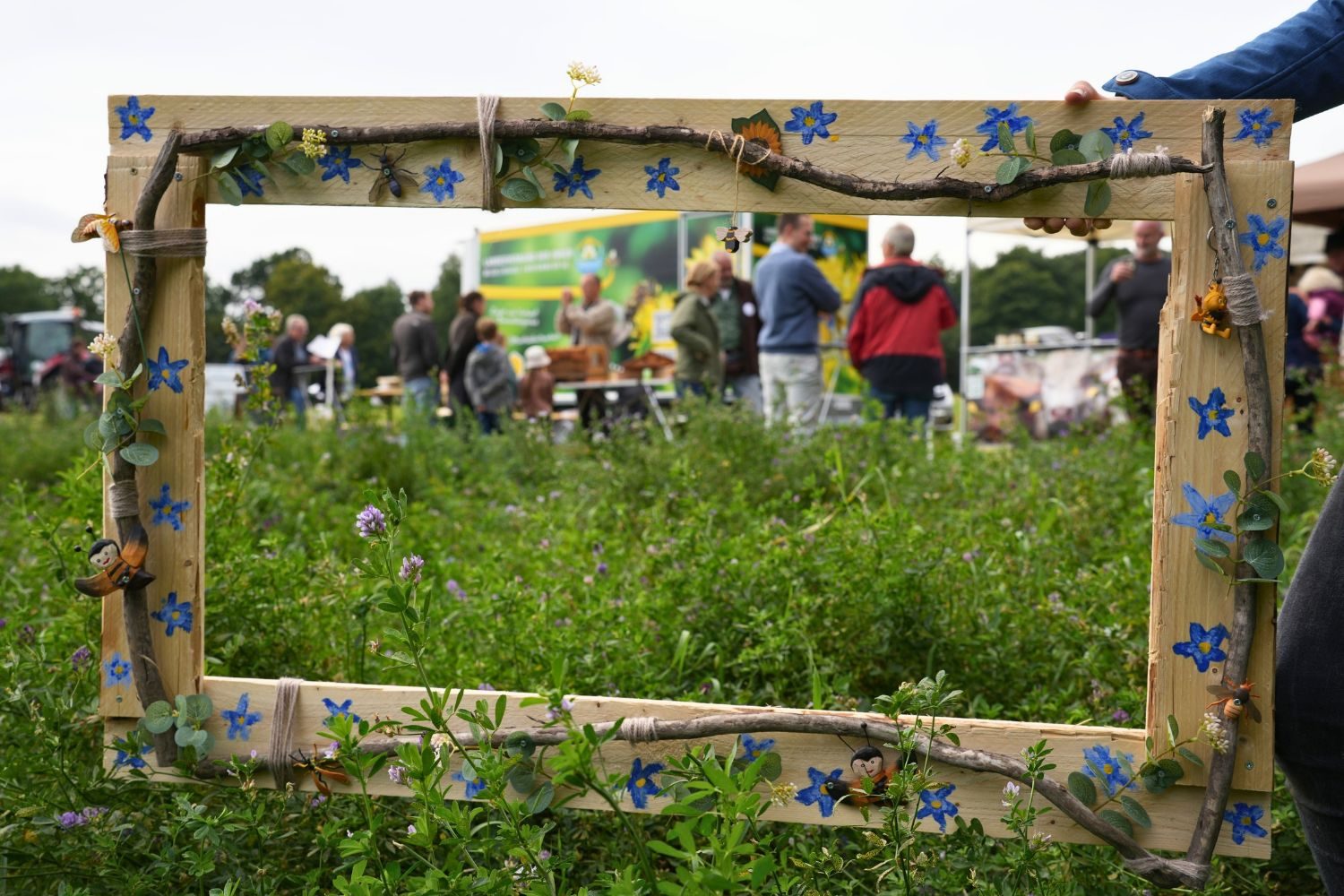
In mid-September, the flowering meadow and research site between the monastery ruins and the beach became the setting for an unusual activity day. While a giant bee wandered around the event grounds, guided tours focused on its much smaller counterparts. Those who set out to find them soon discovered that far more happens in a field of wildflowers than meets the eye.
On 19 September 2026, the BioDi-OH (Biodiversity One Health) project of the One Health Region Western Pomerania invited visitors to discover the natural world right on their doorstep from a different perspective during the “Boom & Bloom” activity day.
Small Creatures, Big Discoveries
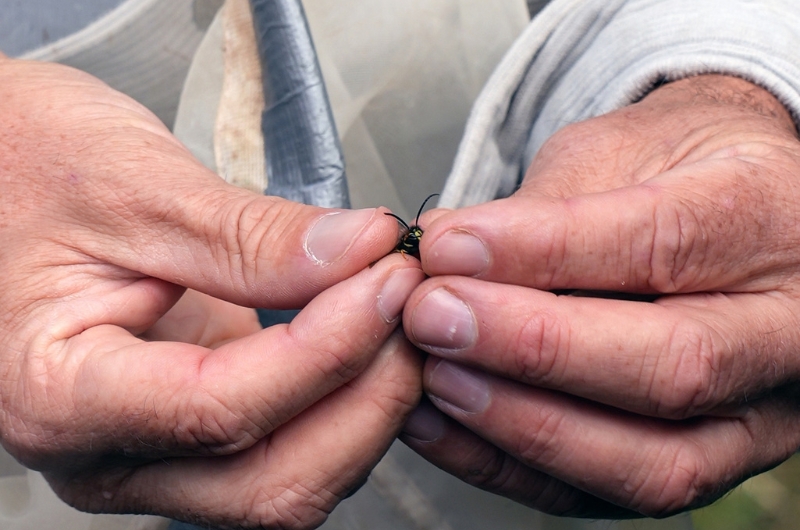
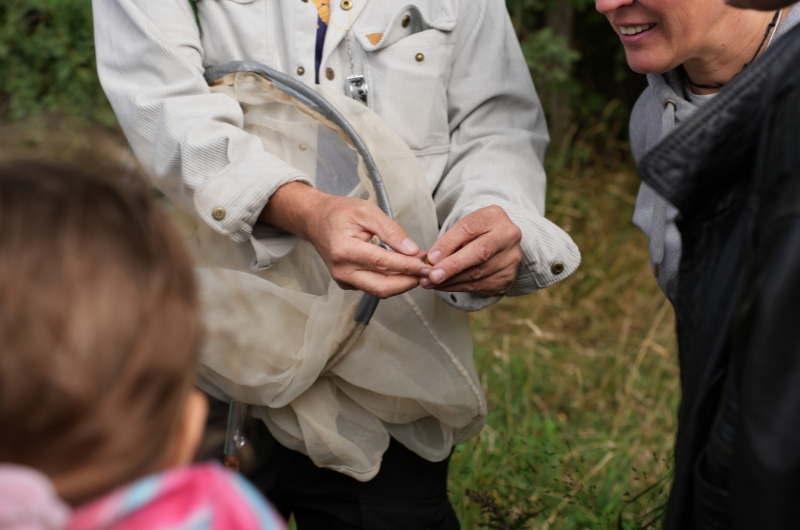
Seeing a bee up close? For many visitors, this was one of the most memorable moments of the day. When a bee was caught during a guided tour, it sparked a sense of wonder. What usually buzzes past us unnoticed could suddenly be observed in much greater detail.
The guided bee tours attracted considerable interest. Experts explained which species can be found at the site, how they live and the role they play in biodiversity. The tours also highlighted that not all bees are alike: unlike honeybees, which live in colonies, most wild bee species are solitary. Some even depend on specific plants for their food.
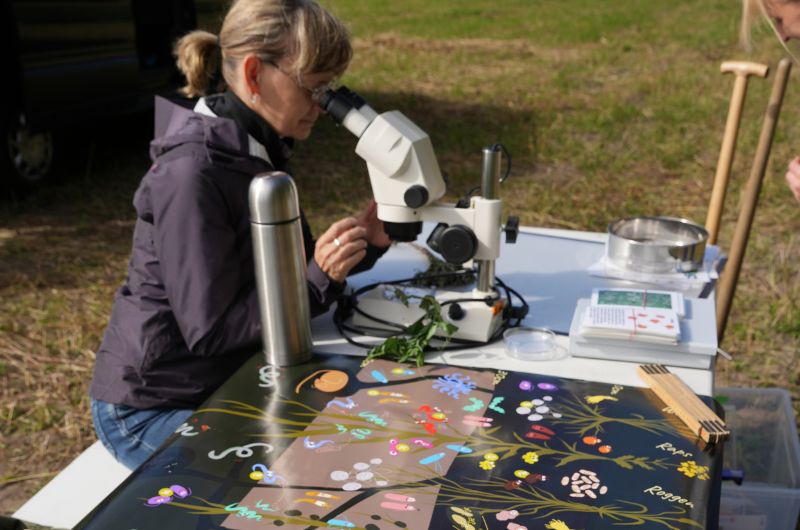
The other activity stations also offered plenty of opportunities to take a closer look. Microscopes revealed details invisible to the naked eye, while plant profiles drew attention to individual species. A mobile beekeeping unit provided insights into the world of honeybees. Questions were actively encouraged and often led to lively conversations between visitors and experts.
A full-sized tractor with a seed drill, along with information stands hosted by the Farmers’ Association and the Greifswald Agricultural Initiative, demonstrated that biodiversity is not just about wildflower meadows, but is also closely linked to agriculture.
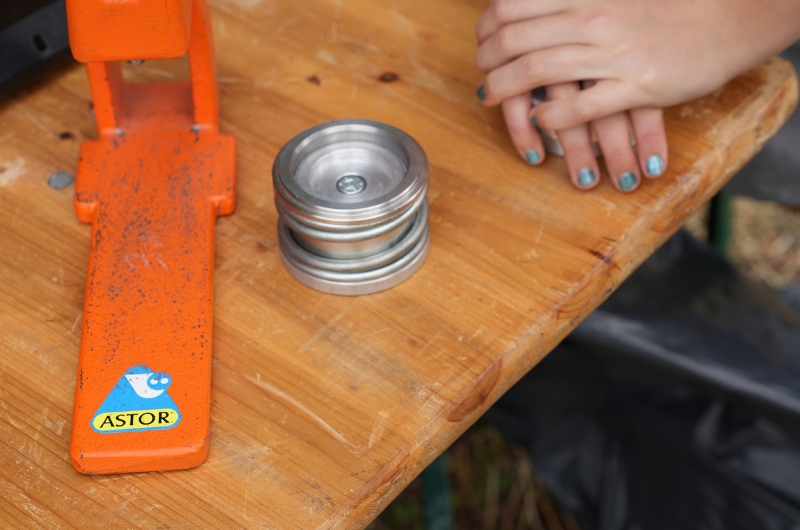
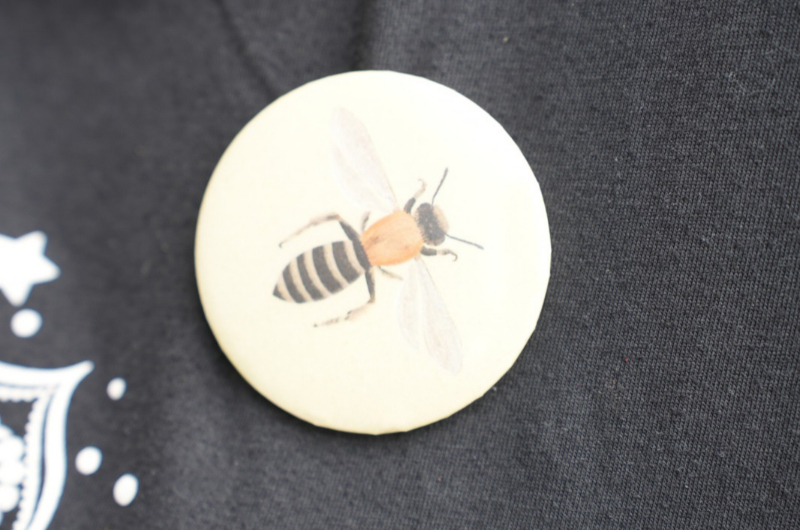
There were plenty of opportunities for children to get involved. A badge-making machine allowed them to create small souvenirs featuring nature-inspired designs, while other hands-on activities encouraged them to explore and experiment. The unexpected star of the day, however, was the larger-than-life bee, which attracted attention from afar and proved to be a popular photo opportunity for children and adults alike.
Live guitar music, coffee and cake created a relaxed atmosphere and gave visitors time to linger between the guided tours. Many families made the most of the open programme. Rather than following a fixed schedule, visitors could decide for themselves where to spend more time and which topics they wanted to explore in greater depth.
What Researchers Are Studying on Three Hectares in Eldena
Behind the activity day is a research project that offers an unusual perspective on biodiversity. In May 2026, a total of 44 plant species were sown on the approximately three-hectare wildflower field. The site is intended to provide habitats for a variety of organisms while also helping researchers understand how biodiversity develops in such an environment.
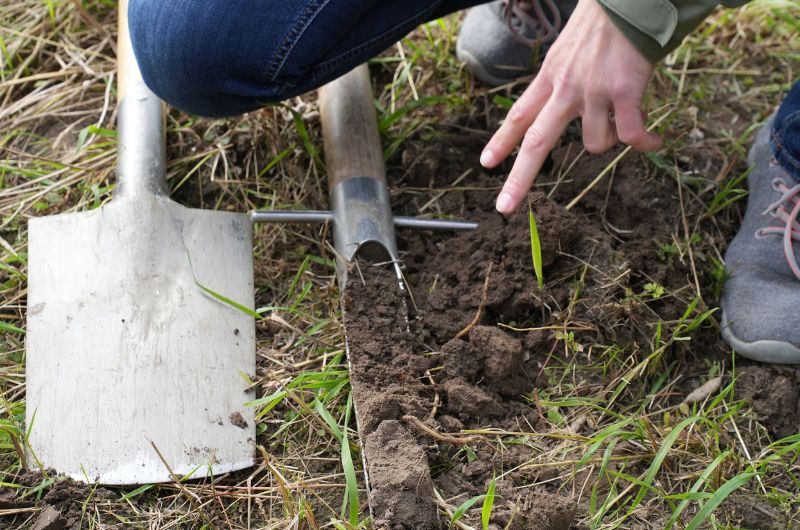
The researchers are not primarily interested in the plants themselves. Instead, they study the insect community and investigate, for example, in collaboration with AgriBiom project, soil health. Which species become established? How do ecological communities change over time? And what conditions promote a diverse range of plant and animal life?
However, the wildflower field is not only of interest to natural scientists. Another area of research explores how people perceive their natural surroundings and the role that experiences in nature can play in their well-being. Linguistic methods, such as conversation analysis, are also used for this purpose.
It is precisely this combination of different research approaches that makes BioDi-OH a One Health project. The health of humans, animals and ecosystems is not considered in isolation. The wildflower field provides a specific site for studying these interconnections, from the relationships between plants and insects to the question of what a natural environment means to the people who experience it.
Visitors to “Boom & Bloom” had the opportunity to experience some of this research firsthand. At the same time, they contributed their own observations, questions and experiences. The activity day thus provided an opportunity to connect scientific perspectives with local knowledge.
A Wildflower Field in Constant Change – and Always Worth Exploring
The mowing of the wildflower field was by no means accidental. It allowed the perennial plants to receive enough light to continue growing, while the annual plants had already finished flowering and dispersed their seeds.
Next year will reveal which plant species have successfully established themselves and how the diversity of flowering plants influences the presence of different bee species.
To ensure that the wildflower field can continue to serve as a research and educational site in the long term, the project team is already considering its future beyond the current funding period. Both the scientific monitoring and the maintenance of the site require a long-term perspective.
“Boom & Bloom” demonstrated the potential of this site. For one afternoon, a meadow that people might otherwise have walked past became a place for close observation and lively discussions.
The activity day was made possible by the dedication of numerous researchers, regional partners and volunteers. We would like to extend our sincere thanks to everyone involved and to all our visitors.
BioDi-OH is a project of the One Health Region Western Pomerania, funded under the BMFTR initiative T!Raum – Transfer Spaces for the Future.










 EN
 DE