WALD I GESUND and CiFly in Dialogue with the BMFTR and Project Management Jülich
How can forests contribute to health promotion? And what can we learn about biodiversity when school students become researchers themselves? Two different approaches united by the One Health concept. On 30 September 2025, the WALD I GESUND and CiFly projects presented their work at the University of Greifswald’s Arboretum. The event was attended by representatives of the Federal Ministry of Research, Technology and Space (BMFTR) and Project Management Jülich (PtJ).
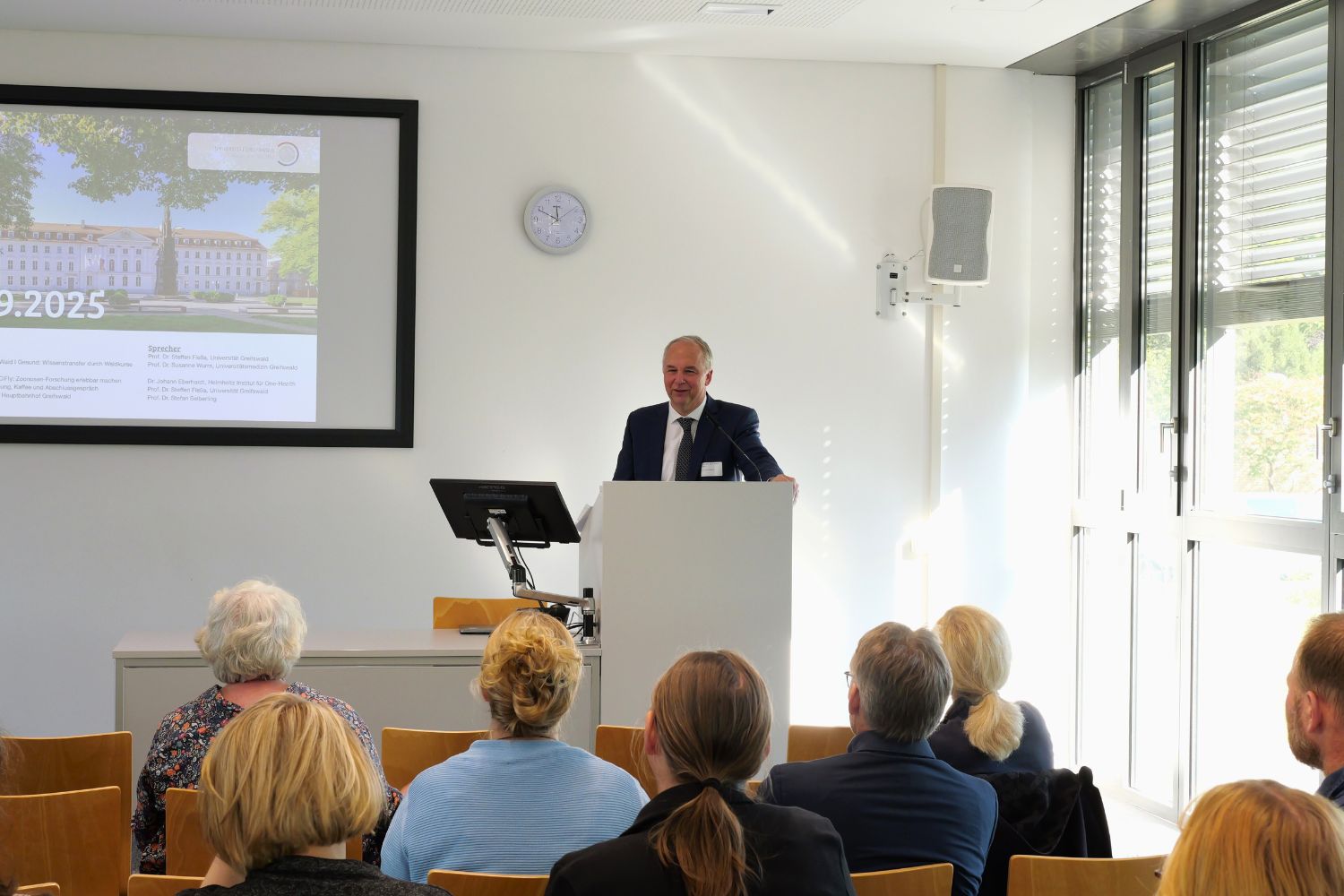
Following the welcome address by Prof. Dr. Steffen Fleßa, the event provided an opportunity to learn about the progress made by both projects and discuss their approaches to knowledge transfer.
WALD I GESUND: Exploring Forests as Spaces for Health and Well-being
The event began with a presentation of the WALD I GESUND project, focusing on how spending time in forests affects human well-being and how scientific findings can be applied to promote health.
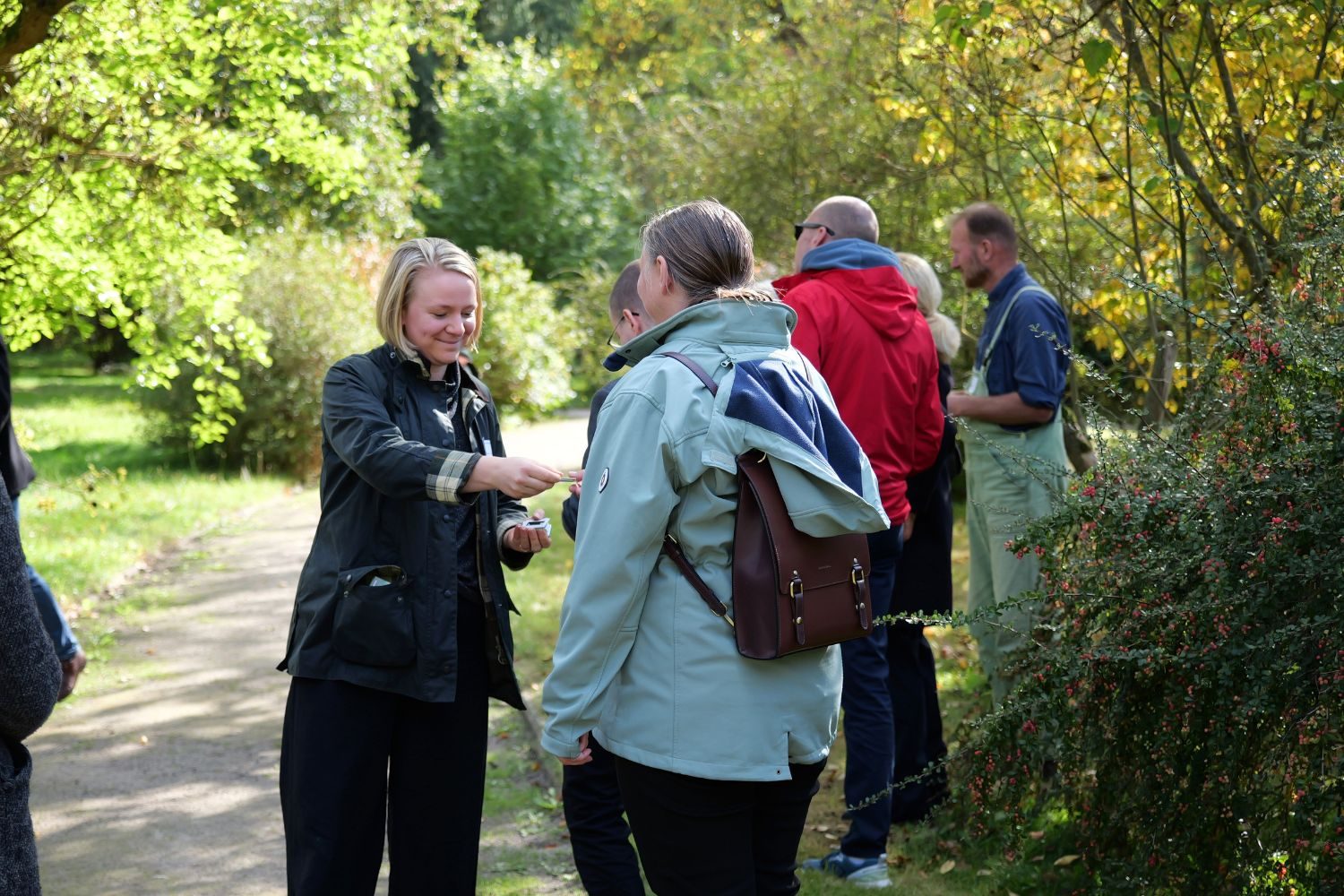
How do forest environments affect stress levels and psychological resilience? What opportunities do nature-based health interventions offer? In addition to learning about the scientific research, guests gained practical insights and experienced the project's approaches firsthand. The Arboretum provided an ideal setting for this.
CiFly: Hands-On Biodiversity Research
In the afternoon, the Citizen Science project CiFly was presented. In collaboration with the Helmholtz Institute for One Health (HIOH) and local schools, including Humboldt-Gymnasium in Greifswald, the project actively involves young people in scientific research.
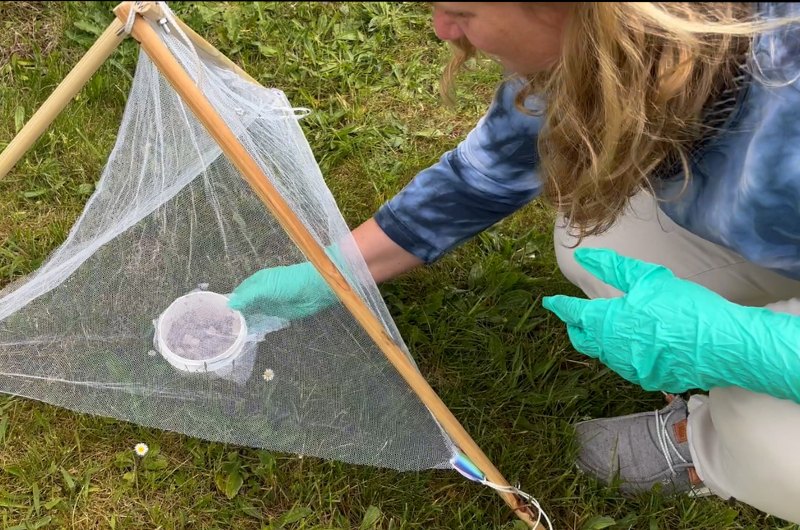
The project focuses on biodiversity and the question of which pathogens may be present in our environment. To investigate this, students collect environmental samples using methods such as fly traps and leaf swabs. The genetic material contained in these samples is then analysed, providing insights into species diversity and potential evidence of zoonotic pathogens.
CiFly goes beyond teaching scientific methods in theory by giving students hands-on research experience. Young people learn to investigate their own research questions, collect samples and develop a deeper understanding of ecological relationships.
Dialogue on Research and Knowledge Transfer
The visit provided an opportunity to discuss the practical implementation and further development of the projects with representatives of the BMFTR and Project Management Jülich (PtJ).
WALD I GESUND and CiFly demonstrate in different ways how scientific research can be connected with practical applications in society. While WALD I GESUND investigates the health benefits of forest environments, CiFly gives young people direct access to biodiversity research.
Both projects are part of the One Health Region Vorpommern initiative. They illustrate the wide range of approaches to exploring the connections between human health, animals and the environment, while making scientific knowledge accessible to people across the region.




 EN
 DE