
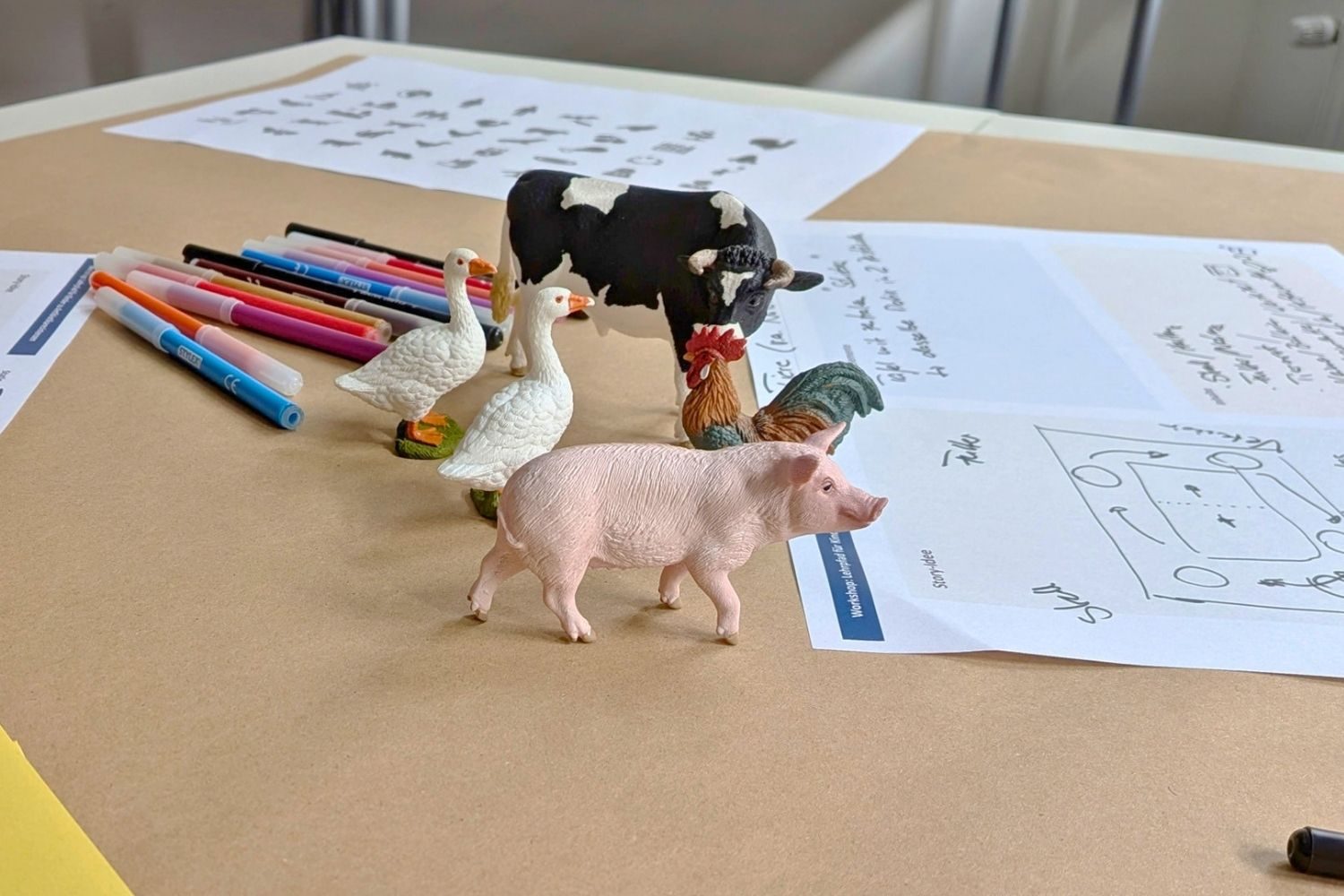
Creative kick-off: Co-creating the concept for the educational trail
How can we present the complex scientific topic of antimicrobial resistance to children in a way that is tangible, engaging and to the point? This question was the focus of an intensive four-hour workshop held on 8 September 2026 as part of our OH-KAMR project.
A key aspect of OH-KAMR is its close collaboration with various stakeholders. The aim of the workshop was therefore to bring together these different perspectives from external experts in agriculture, nature conservation, tourism and educational methodology to discuss the implementation of an interactive educational trail for children aged 6 to 12.
A short quiz featuring some surprising facts about antibiotic resistance was followed by a concise “knowledge snack” on One Health, the One Health Region Vorpommern transfer space, bacteria and resistance. Then it was time to get practical: from their specialist perspectives, what do our stakeholders consider important for the learning trail? In a brainstorming session, they compiled a wide range of topics and ideas that should feature on the information boards.
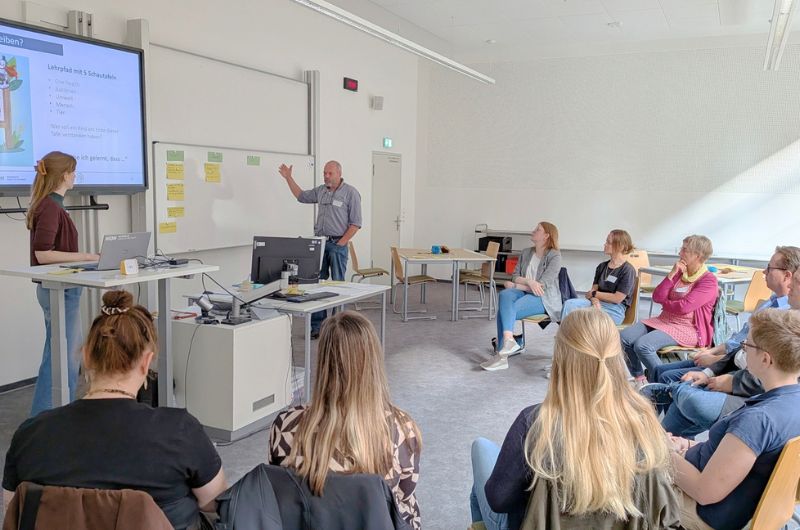
In the subsequent plenary discussion, alongside the key thematic areas, a central component of the OH-KAMR approach also became clear: just how essential it is to involve children themselves in the development of the educational boards and to take their role within the family into account. After all, what they learn through play in nursery, at school or on an educational trail, they often take home with enthusiasm and pass on to their parents and siblings. It is precisely this childlike curiosity that could encourage families to handle this important medicine more consciously and responsibly.
Creating curiosity with the information boards
We then shifted our focus even more strongly onto our young target audience – children aged 6 to 12. What should they take away and understand from these information boards along the educational trail? Which stories, interactive elements and images spark curiosity about this still rather abstract topic? And above all: where can the educational trail be meaningfully integrated into the local leisure offerings of Greifswald and Pomerania?
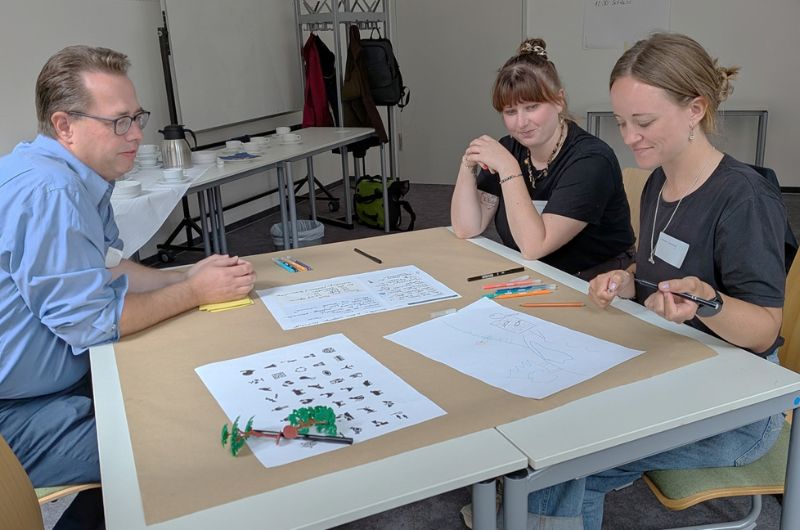
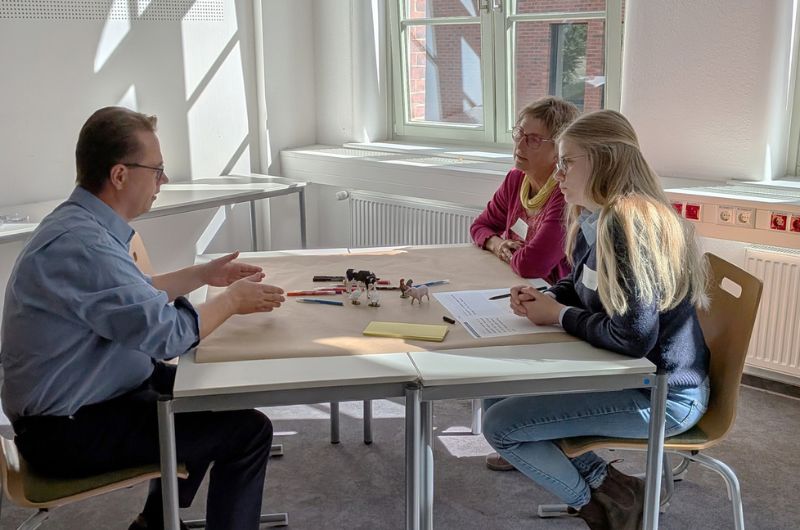
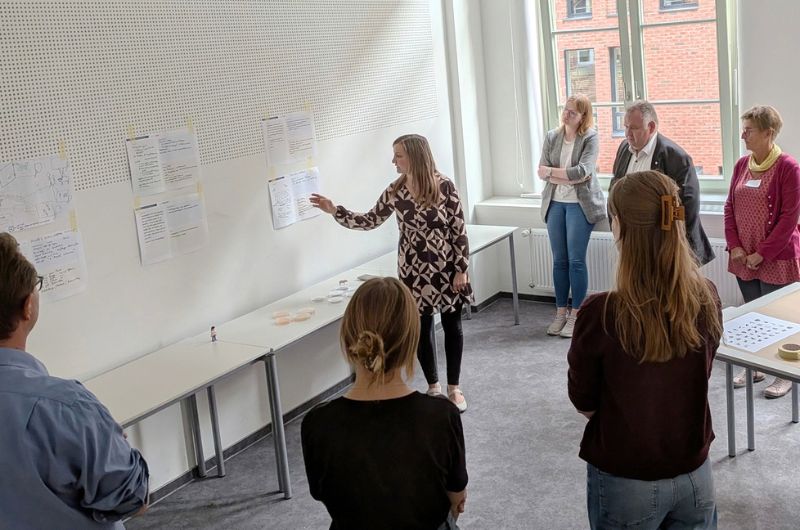
In the carousel workshop, ideas flowed freely and the first design concepts took shape. Participants regularly swapped tables, gathered fresh inspiration, and developed their ideas further through interdisciplinary dialogue. The subsequent pitch was particularly exciting, with the groups presenting their initial ideas and inspiring one another.
In the subsequent plenary discussion, alongside the key thematic areas, a central component of the OH-KAMR approach also became clear: just how essential it is to involve children themselves in the development of the educational boards and to take their role within the family into account. After all, what they learn through play in nursery, at school or on an educational trail, they often take home with enthusiasm and pass on to their parents and siblings. It is precisely this childlike curiosity that could encourage families to handle this important medicine more consciously and responsibly.
Creating curiosity with the information boards
We then shifted our focus even more strongly onto our young target audience – children aged 6 to 12. What should they take away and understand from these information boards along the educational trail? Which stories, interactive elements and images spark curiosity about this still rather abstract topic? And above all: where can the educational trail be meaningfully integrated into the local leisure offerings of Greifswald and Pomerania?
In the carousel workshop, ideas flowed freely and the first design concepts took shape. Participants regularly swapped tables, gathered fresh inspiration, and developed their ideas further through interdisciplinary dialogue. The subsequent pitch was particularly exciting, with the groups presenting their initial ideas and inspiring one another.
A solid foundation for further development
The input, creative ideas and key insights gathered from stakeholders in agriculture, nature conservation, tourism and education are being directly incorporated into the further development of the project. The workshop has once again demonstrated just how valuable this participatory exchange is: it provides an excellent starting point for our educational trail, which aims to entertain and encourage children to experiment in a playful and interactive way. At the same time, it aims to convey an important message: our health is closely linked to that of animals and our environment, and we can all do our bit at home to help preserve it.
The OH-KAMR project is taking place as part of the “One Health Region Vorpommern” transfer initiative; it is funded by the Federal Ministry of Research, Technology and Space (BMFTR) and managed by the Jülich Project Management Organization.


 EN
EN  DE
DE